
Green Burial Options: Eco-Friendly Funeral Practices in Coastal North Carolina
A quiet but meaningful shift has been taking place in how families approach end-of-life decisions.
More individuals are considering how their final arrangements align with the values that guided their lives, and for those who lived with deep respect for the natural world, traditional funeral practices may feel out of step with lifelong principles. Green burial, sometimes called natural burial, offers an alternative that returns the body to the earth in ways that minimize environmental impact while still providing families with the meaningful rituals of farewell.
For coastal Carolina residents, where the rhythms of life are so closely tied to the ocean, sounds, marshes, and maritime forests of the region, the appeal of environmentally conscious funeral practices runs deep. Many local families have spent generations as stewards of the land and water, and a green burial allows that stewardship to extend into a final act of care for the environment that shaped their lives. Understanding what green burial entails, how it differs from conventional practices, and what options are available in our region empowers families to make informed decisions that honor both their loved ones and the planet.
What Defines a Green Burial
At its core, green burial is the practice of returning the body to the earth in a way that allows natural decomposition to occur with minimal environmental disruption. This approach avoids many of the materials and processes associated with conventional modern burials, including embalming chemicals, metal caskets, and concrete burial vaults. Instead, green burials use biodegradable materials and natural processes that allow the body to become part of the surrounding ecosystem over time.
The Green Burial Council, a nonprofit organization that establishes standards for environmentally sustainable funeral practices, recognizes several levels of green burial. Hybrid cemeteries allow green burials within designated sections of traditional cemetery grounds. Natural burial grounds maintain entire cemetery landscapes in ways that preserve native vegetation and wildlife habitat. Conservation burial grounds go further, partnering with land conservation organizations to permanently protect natural areas through burial site stewardship.
Each level offers families different ways to participate in environmentally conscious practices. Some prefer the familiarity of a traditional cemetery setting combined with the simplicity of a green burial. Others are drawn to wilder landscapes where graves are marked with native stones, GPS coordinates, or living memorials rather than conventional headstones. The right choice depends on personal values, family preferences, and the specific options available in a given region.
The Environmental Impact of Conventional Practices
Understanding why some families gravitate toward green burial requires acknowledging the environmental footprint of conventional funeral practices. Traditional modern burials in the United States involve significant amounts of embalming fluid, hardwood and metal caskets, concrete burial vaults, and ongoing cemetery maintenance that often relies on substantial water usage, fertilizers, and pesticides.
Embalming fluid, which typically contains formaldehyde, methanol, and other chemicals, was developed primarily during the Civil War era to preserve bodies during long-distance transport. While modern embalming serves practical purposes related to visitation timing and open-casket services, the practice introduces chemicals into the soil over time as caskets and vaults eventually deteriorate. Conventional caskets made from tropical hardwoods or coated metals also contribute to resource consumption and slow decomposition processes that prevent natural recycling of nutrients back into the ecosystem.
For families weighing these considerations, green burial offers an alternative that aligns with environmental values without sacrificing the meaningful rituals of farewell. The simplicity of natural burial often appeals to those who prefer understated tributes that emphasize connection to nature over elaborate ceremonial elements. Families who want to explore the full range of options available can review thoughtful service packages that include both traditional and alternative arrangements.
Materials and Methods of Green Burial
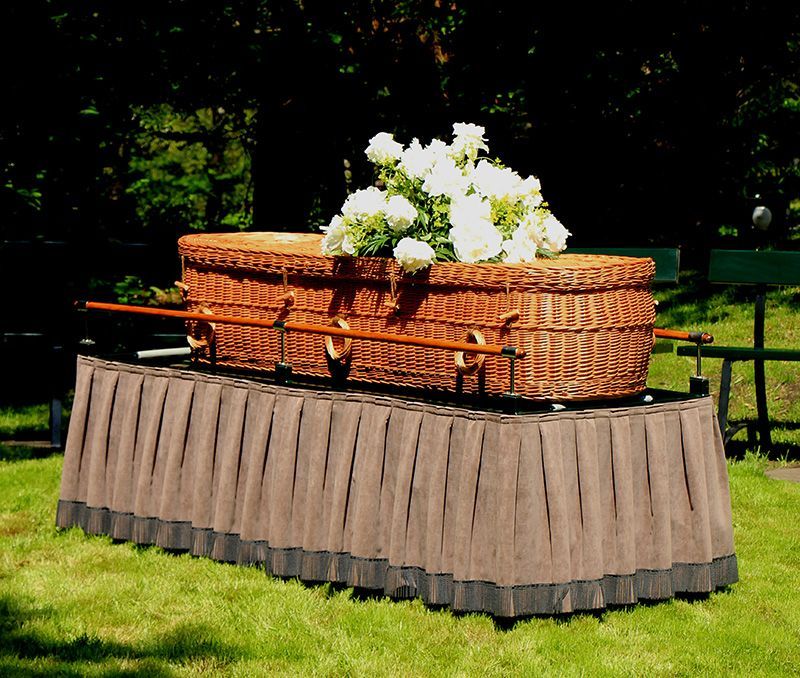
Green burial relies on biodegradable materials that allow natural decomposition to proceed without introducing synthetic substances into the soil. Caskets used in green burials are typically constructed from untreated wood, wicker, bamboo, cardboard, or even woven natural fibers. Some families choose simple burial shrouds made from cotton, linen, silk, or wool, which wrap the body in cloth without any rigid container at all.
The absence of embalming is another defining feature of green burial. Bodies are kept cool through refrigeration during the period between death and burial, which typically takes place within a few days. For families who wish to have viewing or visitation opportunities, this can be arranged using dry ice or other refrigeration methods that preserve the body temporarily without chemical intervention. The result is a more natural appearance that some families find deeply meaningful, as it reflects the reality of death without artificial enhancement.
Burial depth in green cemeteries is typically shallower than in conventional cemeteries, generally between three and four feet rather than the standard six. This shallower depth places the body in the biologically active layer of soil where decomposition occurs more efficiently, and nutrients can be recycled into surrounding plant life. Burial vaults, which are required in most traditional cemeteries to prevent ground settling and accommodate maintenance equipment, are not used in green burials. The natural settling of the soil over time becomes part of the burial process itself.
Grave markers in green burial settings tend to reflect the natural environment. Flat stones, native rocks, engraved wooden markers, GPS-recorded coordinates, or living memorials such as trees or wildflower plantings replace the polished granite headstones common in conventional cemeteries. Some families choose no marker at all, preferring that their loved one simply become part of the landscape over time.
Cremation as a Greener Alternative
For families who appreciate the values of green burial but cannot access dedicated natural burial grounds, cremation offers another path that many consider more environmentally responsible than conventional burial. While cremation does involve energy consumption and some emissions, the overall footprint is generally smaller than that of a traditional burial with embalming, hardwood casket, and concrete vault.
Cremation also provides remarkable flexibility for families who wish to incorporate environmental considerations into their farewell rituals. Ashes can be interred in biodegradable urns that contain seeds or plant materials, allowing memorial trees or gardens to grow from the cremated remains. Scattering ashes in meaningful natural locations, where legally permitted, returns the remains directly to the landscape. Some families choose to combine ashes with reef ball materials that contribute to marine ecosystem restoration, particularly meaningful for coastal Carolina families with deep connections to the ocean.
The flexibility of cremation services allows families to design farewell experiences that honor both their loved one's environmental values and the personal meanings they wish to express. Memorial services can take place at meaningful outdoor locations, incorporate natural elements like wildflowers and native plants, and emphasize connection to the landscapes that mattered most during the deceased's lifetime.
Maritime Ocean Burials and Coastal Connections
For families along the Crystal Coast, the ocean itself offers a uniquely meaningful option for environmentally conscious final arrangements. Maritime ocean burials, conducted in accordance with Environmental Protection Agency regulations, allow either full body or cremated remains to be committed to the sea in ceremonies that often feel both ancient and deeply personal.
Ocean burials in coastal Carolina have particular resonance for those whose lives were shaped by the Atlantic. Commercial fishermen, recreational sailors, lifelong beachgoers, naval veterans, and anyone whose deepest sense of peace was found by the water often find that returning to the sea represents the most authentic possible farewell. The biodegradable materials used in maritime burials, combined with the natural processes of the ocean ecosystem, make this practice inherently aligned with environmental values.
The ceremonies themselves can be tailored to reflect personal preferences, from quiet committals attended by immediate family to larger gatherings that include extended community. Biodegradable wreaths and flower arrangements scattered across the water provide visual tributes that gradually dissolve into the marine environment. For families interested in this option, dedicated maritime ocean burial services offer guidance through every step of planning and executing meaningful ceremonies at sea.
Practical Considerations for Green Burial Planning
While green burial offers many appealing aspects, families should be aware of practical considerations that may influence their decisions. Not all cemeteries currently accommodate green burial, though the number of certified green burial grounds in North Carolina and across the country continues to grow. Families interested in this option may need to research available locations within reasonable distance of their community.
State and local regulations also affect how green burials can be conducted. Most states allow shroud-only burials in approved cemeteries, but specific requirements vary regarding burial depth, distance from water sources, and other factors. Working with experienced funeral professionals who understand both the regulatory framework and the philosophical principles of green burial helps ensure that arrangements proceed smoothly.
Timing considerations also differ somewhat from conventional practices. Because embalming is not used, green burials typically take place within a few days of death rather than allowing the extended timing that embalming permits. Families who need to coordinate travel for distant relatives or accommodate other scheduling considerations should plan accordingly and discuss timing options with their funeral provider.
For those who wish to ensure that their environmentally conscious values are honored in their own final arrangements, advance planning offers important advantages. Documenting preferences for green burial, identifying acceptable cemetery options, and discussing wishes with family members removes uncertainty during what will already be an emotional time. Resources for planning ahead help individuals and families think through these decisions thoughtfully and create plans that reflect their deepest values.
Honoring Both Lives and the Earth
The growing interest in green burial reflects a broader awareness that the choices we make at the end of life can express the same values that guided us throughout our years. For those who lived with reverence for the natural world, who taught their children to care for the environment, who found their deepest peace in coastal landscapes or forested trails, returning to the earth in ways that minimize ecological impact feels like a natural completion of a meaningful life.
This does not mean that green burial is the right choice for every family. Conventional practices continue to offer meaningful traditions that bring comfort to many mourners. The point is not that one approach is universally better than another, but rather that families now have a broader range of options to consider when honoring their loved ones. Knowing those options exist and understanding what each involves empowers thoughtful decisions that align with personal values, religious traditions, and family preferences.
If your family is exploring environmentally conscious funeral options or would like to learn more about how green burial practices might be incorporated into meaningful farewell arrangements, the compassionate professionals at Noe Funeral Service are here to provide thoughtful guidance and personalized support.
Whether you are planning ahead with sustainability in mind or navigating an immediate need, our team is available to discuss your options and help you create arrangements that honor both the life lived and the world that shaped it.